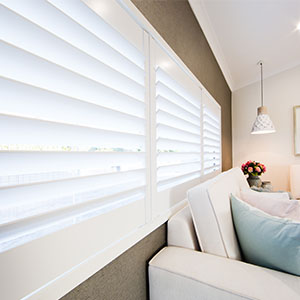
Plantation shutters sit at the more considered end of the window furnishing market, and for most people the first real question is simple: what is this going to cost? It is the right question to open with. It is a fixed, custom-made product. They get measured, manufactured, and installed to the specific dimensions of each window, which means plantation shutters cost is never a flat figure that applies uniformly across every home or every project. There are genuine variables that move the final number considerably, and understanding them upfront makes it easier to evaluate quotes, plan a budget realistically, and avoid the frustration of receiving a figure later in the process that does not match what was expected. It also makes the consultation more productive, because clients who arrive with a working understanding of how pricing is structured tend to make faster, more confident decisions on the day.
The team at Decor Blinds has been manufacturing and installing plantation shutters in Australia since 1985, and the cost conversation is one we have with almost every client at some point. What follows is an honest breakdown of what drives pricing, what the product actually delivers for that investment over its service life, and where other window furnishing options fit into the picture for clients who are still working through their choices before committing.
What Actually Drives Plantation Shutters Cost
Window size is the most direct factor. Plantation shutters are custom-made to the dimensions of each individual window, which means the material and labour required scales directly with the size of the opening. A single standard bedroom window and a wide living room bay are entirely different jobs in terms of scope, and the cost reflects that clearly once a proper measure has been done. There is no shelf price because there is no standard window, and any figure given without a site measure should be treated as a rough estimate rather than a reliable quote worth acting on.
Louvre width is another specification that affects price more than most people expect before they start looking into the detail. Wider louvres use more material per panel and tend to suit larger windows, where the proportion works better visually and gives the installation a cleaner, more intentional finish. Narrower louvres are often preferred for smaller windows and homes with a period character where a finer louvre profile suits the existing architecture better. The louvre width is worth discussing during the measure rather than defaulting to whichever option is most common, because it affects both the look of the finished installation and the overall cost.
Configuration is a factor that is easy to overlook when first thinking about price. Plantation shutters can be installed as hinged panels, sliding systems, bi-fold configurations, or fixed panels, depending on the window type and how the space is used day to day. Each configuration carries different hardware and installation requirements, and those differences show up clearly in the quote. A bi-fold configuration on a wide opening, for instance, involves more components and more time on site than a straightforward hinged panel on a standard window. Getting this right for how the window actually operates is one of the core reasons a proper site measure exists, and it is best resolved before any commitment is made rather than after.
Frame selection is the other variable that most people do not think about until they are well into the process. The frame type determines how the shutter sits within the window reveal, and the right choice depends on the specific profile and condition of each individual window. Applying the wrong frame type to a non-standard or older reveal creates fitting problems that cost considerably more to address after the installation than selecting the correct frame from the outset. It is a detail that matters, and it can only be assessed reliably by looking at the window in person.
What the Product Delivers for That Investment
Plantation shutters are a long-service product, and that changes the way the cost should be read. Unlike fabric blinds or other soft furnishings that get replaced periodically as they wear or fall out of step with how a space is being used, a well-specified and properly installed plantation shutter is built to last the life of the home. When the upfront plantation shutters cost is considered across a decade or more of consistent performance with minimal maintenance required, the value proposition looks quite different to how it reads as a single line item on a first quote.
Thermalite plantation shutters are manufactured locally in Brisbane and suited to both internal and external applications, including wet areas where other materials would not hold up reliably over time. They will not crack, warp, shrink, or discolour, and the louvre tension system is engineered to hold without needing adjustment throughout the life of the product. That kind of reliable, low-maintenance performance is a meaningful part of the value equation and worth factoring into any comparison against alternatives that require periodic attention or replacement before the same lifespan is reached.
Beyond durability, plantation shutters deliver precise control over light and privacy in a way that most other window coverings cannot replicate at the same level. The louvres can be tilted to filter light at any angle while keeping airflow moving through the room, and closing the panels fully provides a degree of privacy and insulation that fabric alternatives do not match. A third-party thermal test found that Thermalite shutters can block up to 16 degrees of temperature transfer through the window, which has a genuine cumulative impact on heating and cooling costs over time. For clients who factor running costs into their thinking alongside the upfront investment, this is a point worth weighing seriously rather than setting aside as secondary to the purchase price.
The visual quality of the product over time is also worth naming directly. Plantation shutters bring a finished, architectural quality to a window that few other treatments match. They hold their appearance without fading, sagging, or dating in the way that fabric products tend to across the same number of years. That consistency matters in how a home presents and in its value over time.
How Other Products Fit Into the Picture
For clients still working through their options, it helps to understand where plantation shutters sit relative to the alternatives rather than looking at the cost in isolation.
Aluminium shutters serve a different purpose and are worth knowing about for clients who are also thinking about outdoor areas as part of the same project. They are designed for external and semi-external applications such as alfresco spaces, pool surrounds, and balconies, and are built to handle sustained weather exposure including wind loading and salt air environments. Many projects include both plantation shutters for the interior and aluminium shutters for an outdoor living area. The two are best understood as products that address different conditions and work alongside each other rather than as alternatives where one replaces the other.
A zipscreen suits clients with large alfresco openings where sun and weather protection are the priority without the need for a rigid panel structure. It uses a tensioned fabric screen running inside channels to seal against wind, insects, and direct sun while maintaining some degree of airflow and outward visibility. For the right application it works well in combination with interior plantation shutters, because the two products address fundamentally different conditions.
For interior spaces where plantation shutters are not the right fit, whether because of budget, window type, or the aesthetic a particular room calls for, blinds cover a wide range of applications. Roller blinds offer a clean, low-profile finish with a broad fabric selection. Honeycomb blinds bring meaningful thermal performance through their cellular construction. For spaces where a more refined interior finish is the goal, elegant shades sit at the upper end of the category. A well-planned property often draws on more than one product type, placing plantation shutters where they perform best and using other solutions in spaces where they are better suited.
Why the On-Site Measure Comes Before Any Price
No figure quoted online without a site measure should be treated as a reliable number. Window dimensions vary even within the same property, reveals differ from room to room, and the condition of existing architraves and frames can affect what is required before installation can begin cleanly. A quote without a measure is an approximation, and approximations rarely hold once the real conditions of each window become apparent on site.
A proper measure also opens up the specification conversation in a way that an online inquiry form cannot replicate. Louvre width, panel configuration, frame type, and whether motorisation is a viable option for the installation are all decisions that are easier to work through in person, with someone who understands the full range of variables involved and what each one means for the outcome. These decisions affect both the quality of the finished result and the final cost, and they deserve a proper conversation rather than a best guess made from photos or floor plans.
There is also value in having the full product range visible and explained during a consultation. Clients who have only seen plantation shutters in one configuration or one colour often make different decisions once they see the available options in context, and those decisions are better for it.
Installation complexity is another thing the measure captures that an online quote cannot. Multi-storey access, windows set at unusual heights, heritage properties with non-standard reveals, and openings that have been modified over the years all add variables that affect how long a job takes and what it costs. None of these situations are problems that cannot be solved, but they need to be understood before a quote is prepared rather than discovered once installation has already begun.
No Guesswork, No Generic Rates
Every plantation shutters cost figure we prepare at Decor Blinds is based on the actual dimensions and conditions of the project, not a generic rate applied uniformly across every window regardless of what they actually present. Pricing varies because every project is genuinely different, and the only way to arrive at a figure that will hold at the invoice stage is to assess the space in person before anything is committed to writing.
That applies whether the project covers a single window or an entire property, and whether it calls for plantation shutters only or a combination of product types across different areas of the home. Reach out through the website or call to arrange a time that works. The team at Decor Blinds will handle everything from the initial measure through to the finished installation, and every consultation is completely obligation-free.